
The heart of Indian literature beats with the rhythm of poetry, and within this vast tradition, Shayari stands as a magnificent, resonant form. Shayari is a poetic expression in which emotions, thoughts, and experiences are conveyed through carefully structured verses, often written in Urdu, Hindi, or Persian.
If you appreciate the rhythm, emotion, and tension of Shayari, you may also enjoy exploring interactive experiences such as the red door live casino game, which captures similar moments of anticipation and expressive engagement.
Origins and Evolution
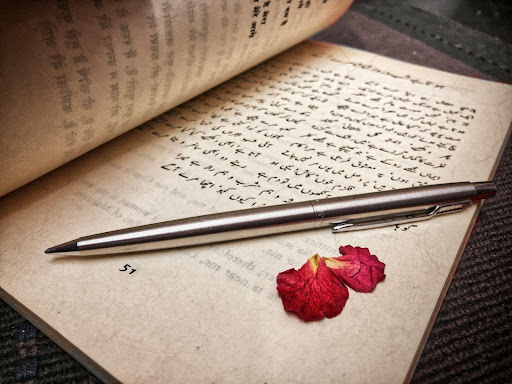
Shayari is deeply intertwined with the development of the Urdu and Hindustani languages. Its roots trace back to the Persian poetic tradition, particularly the Ghazal. Persian poets traveling to the Indian subcontinent introduced these structured forms, which were then assimilated and adapted by local scholars and artists. The fusion of Persian aesthetics with local Indian sensibilities gave birth to the unique art of Shayari.
This blend happened predominantly in the courts of the Sultanates and the subsequent Mughal Empire. These royal environments served as crucial patrons, encouraging poets to refine their craft. The early Shayari masters wrote primarily in Persian, but the transition to Urdu began to take firm hold by the 17th century.
The structure of the Shayari is typically the Sher, a couplet that forms a complete thought. A collection of these couplets constitutes a Ghazal. The defining characteristic of the Sher is its thematic independence, even within the larger framework of a single Ghazal. This self-contained brilliance is central to its widespread appeal.
The traditional structure of the Ghazal is governed by strict rules that dictate meter and rhyme:
- Matla: The very first couplet (Sher) of the Ghazal, where both lines rhyme and share the Radif and Qafia.
- Radif: The refrain, a word or short phrase that is repeated at the end of the second line of every couplet.
- Qafia: The rhyming scheme that precedes the Radif in every rhyming line.
- Maqta: The final couplet of the Ghazal, in which the poet typically includes their takhallus (pen-name).
The Golden Ages
The Mughal era, particularly under rulers like Akbar and Shah Jahan, marked the golden age of Shayari. Poets like Mir Taqi Mir and Khwaja Mir Dard established the fundamental aesthetics of the form in the 18th century. Their work dealt with themes of love, spirituality, and the transient nature of life.
The 19th century introduced one of the most revered names in Shayari: Mirza Ghalib. His poetry elevated the form from mere romantic verse to complex philosophical inquiry. Ghalib is celebrated for his wit, his profound skepticism, and his masterful command over the nuances of the language.
Shayari evolved beyond courtly entertainment to become a staple of Mushairas, public poetic gatherings. These events became vital cultural institutions, allowing poets to share their latest work and engage directly with the populace.
The tradition of the Mushaira is a testament to the democratic nature of the art form. This public dissemination helped cement Shayari as an essential component of the Indian and Pakistani cultural fabric.
Modern Voices and Lasting Influence
The 20th century saw Shayari adapt to the tumultuous political and social landscape of the subcontinent. Poets like Allama Muhammad Iqbal infused the Ghazal with a powerful political and pan-Islamic consciousness. His work directly addressed the need for community reform and intellectual awakening.
Following Indian independence and partition, the tradition continued to flourish, adapting to new realities. Poets such as Faiz Ahmed Faiz and Ahmed Faraz used the classic structure to critique social injustice and express hope for a fairer society. They masterfully blended the traditional language of love with revolutionary zeal.
Shayari’s influence also pervades popular culture. The lyrics of classic and modern Bollywood songs frequently borrow the structure and sensibility of the Ghazal. The melodic rhythm and emotive content are perfect for cinematic expression. This integration ensures the form reaches millions globally.
Furthermore, the simplicity of the Sher makes it perfectly suited for contemporary digital platforms. It is easily shared and quoted, finding new audiences on social media. This continued relevance demonstrates the form’s timeless nature.
An Enduring Cultural Treasury
Shayari, originating in Persian and blossoming in the soil of Urdu literature, stands as an enduring cultural treasury. It has successfully navigated centuries of social and political change, always retaining its core identity while adapting its message. This beautiful form continues to inspire and connect people across generations and geographies.